LinearB vs Jellyfish (2026): Self-Serve or Sales-Led?
SELF-SERVE OR SALES-LED
Hover or focus to flip ↻A fair LinearB vs Jellyfish comparison for 2026: self-serve metrics platform against sales-led finance intelligence, priced and sourced, plus a third lens.
TL;DR: This is less a feature fight than a fork in buying motion. LinearB is the self-serve platform: published pricing, a 45-day trial, the category's largest benchmark cohort, and gitStream automation, all buyable by an engineering leader this quarter. Jellyfish is the sales-led finance-intelligence incumbent: a patented effort-allocation model, cost capitalization, R&D tax-credit support, and board-grade rollups, sold on annual contracts that third parties estimate at $30K+ minimums. Below roughly 50 engineers the choice mostly makes itself. Where they overlap, one question separates them - and, as we argue at the end, catches both: can anyone re-derive the number? All claims cited, as of July 2026.
Disclosure first: we build Busfactor, a competitor to both vendors on this page. That's exactly why the comparison has to be scrupulously fair; a rival's teardown is worthless the moment it strawmans. So: every load-bearing claim below links to the vendor's own page, Jellyfish's unpublished pricing is marked as third-party estimate everywhere it appears, and each product's genuine advantages are conceded in full. Our own case is confined to the final section, clearly labeled.
Two different products wearing one category label
LinearB is an engineering-metrics platform for engineering leaders. Its centerpiece is comparison: your DORA and PR metrics banded against 8.1M+ PRs from 4,800 teams, plus gitStream, programmable automation that routes reviews, labels PRs, and auto-approves low-risk changes. You can read the price list, start a 45-day trial today, and never talk to sales below the Enterprise tier.
Jellyfish is engineering intelligence for the CFO's side of the table as much as the CTO's. At its heart is the patented Work Model: it ingests the "data exhaust" from Jira and Git and infers how each engineer's week splits across initiatives, expressed in FTEs, with no timesheets. That feeds DevFinOps: cost capitalization, "audit-ready" reports, and R&D tax-credit support, the artifacts that make an engineering-intelligence subscription look self-funding to a finance team. Backed by $114.5M raised and a 20M-PR research corpus, sold exclusively through sales.
If you're 25 engineers with no capitalization requirement, this comparison is over: LinearB (or something in its class; see LinearB vs Swarmia) is the shape of tool you're shopping for, and community reports describe Jellyfish as impractical under roughly 30-50 engineers. The interesting comparison starts where the buyers overlap: 50+ engineers, finance asking questions, leadership wanting delivery metrics.
Where LinearB beats Jellyfish
- Buying motion and transparency. Published per-contributor prices, self-serve trial, no procurement cycle to evaluate. Jellyfish is quote-only, annual contracts, sales-led. You can't even see it without a demo call.
- The benchmark cohort. LinearB's in-product bands over 8.1M+ PRs answer "is this normal?" with live peer data. Jellyfish has a large research corpus, but comparative banding is not its centerpiece.
- gitStream acts on the work: review routing, auto-approval, labels. Jellyfish observes and reports; it doesn't touch the PR.
- Cost floor. LinearB's practical floor (as of July 2026) is about $870/month (Essentials, 30-seat minimum). Jellyfish's is estimated at $30K+/year by third parties - an order of magnitude more commitment before value is proven.
Where Jellyfish beats LinearB
- Finance depth. The Work Model's zero-instrumentation allocation genuinely survives messy Jira (no rule setup, no discipline required of teams), and it rolls up to capitalization reports and R&D tax-credit support that can materially offset the product's own cost. LinearB has Enterprise-gated cost capitalization and allocation, but Jellyfish owns the FP&A relationship; it's the vendor finance already knows.
- Delivery-lifecycle visibility. Life Cycle Explorer buckets every issue's life into Refinement/Work/Review/Deployment phases and flags idle gaps and outliers. Aggregate, Jira-state arithmetic, but a real bottleneck surface LinearB doesn't replicate.
- AI tool breadth. Jellyfish's AI Impact covers the widest tool list in the field (Copilot, Cursor, Claude Code, Amazon Q, Gemini, Windsurf, CodeRabbit, Devin and more) plus token-spend views by tool, team, or initiative. LinearB's AI Analytics source list is solid but narrower, and its token-cost story thinner.
- Enterprise gravity. Incident integration, enterprise logos, a research corpus, and a buying process procurement teams recognize. If your org buys software by RFP, Jellyfish speaks that language natively.
The part both vendors would rather you not dwell on
Both products put probabilistic machinery inside their most load-bearing numbers, and neither publishes a way to check it.
- LinearB's AI-assisted classification is a tunable confidence threshold over an undisclosed model. Per their own release notes, the default moved from 50 to 25 in June 2026, silently changing what every earlier adoption chart meant.
- Jellyfish's flagship allocation is a patented, undisclosed scoring model, now with AI-powered categorization on top and LLM agents interpreting results. The word "patented" is doing the work "verifiable" should be doing: no customer can recompute their own effort split, and no reproducibility claim appears anywhere in their public material.
For a full survey of which vendors in this category can and can't make reproducibility claims, see our determinism audit. The pattern here is the rule, not the exception.
Who should pick which
| You are… | Pick |
|---|---|
| Engineering leader who wants metrics + automation, buyable this week | LinearB |
| Under ~50 engineers | LinearB (Jellyfish's own motion filters you out) |
| Want live peer benchmarks in the product | LinearB |
| CFO/FP&A alignment is the driving requirement (CapEx, R&D credits) | Jellyfish |
| Big org, RFP-driven buying, annual contracts are normal for you | Jellyfish |
| Widest AI-tool coverage + token spend rollups | Jellyfish |
Related matchups: Swarmia vs Jellyfish pits transparent rules against the patented model on the finance turf specifically; LinearB vs DX covers the telemetry-vs-survey fork on the other flank.
The empty seat in this fork
Now the labeled pitch. The fork above - self-serve metrics or sales-led finance intelligence - leaves one seat empty: the buyer who needs the finance-grade artifacts at the self-serve price, and needs the numbers to survive an auditor who asks "show me how this was computed."
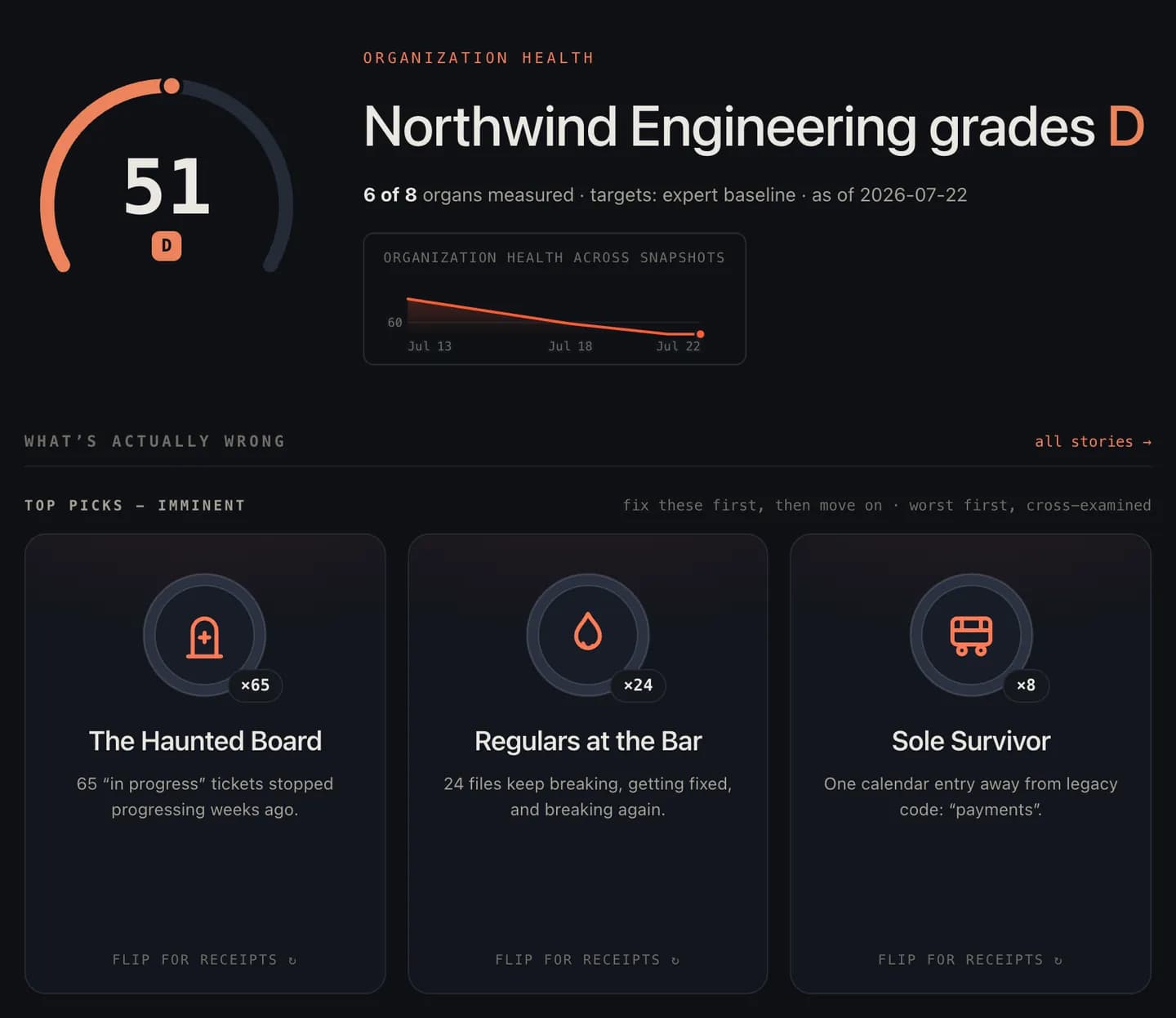
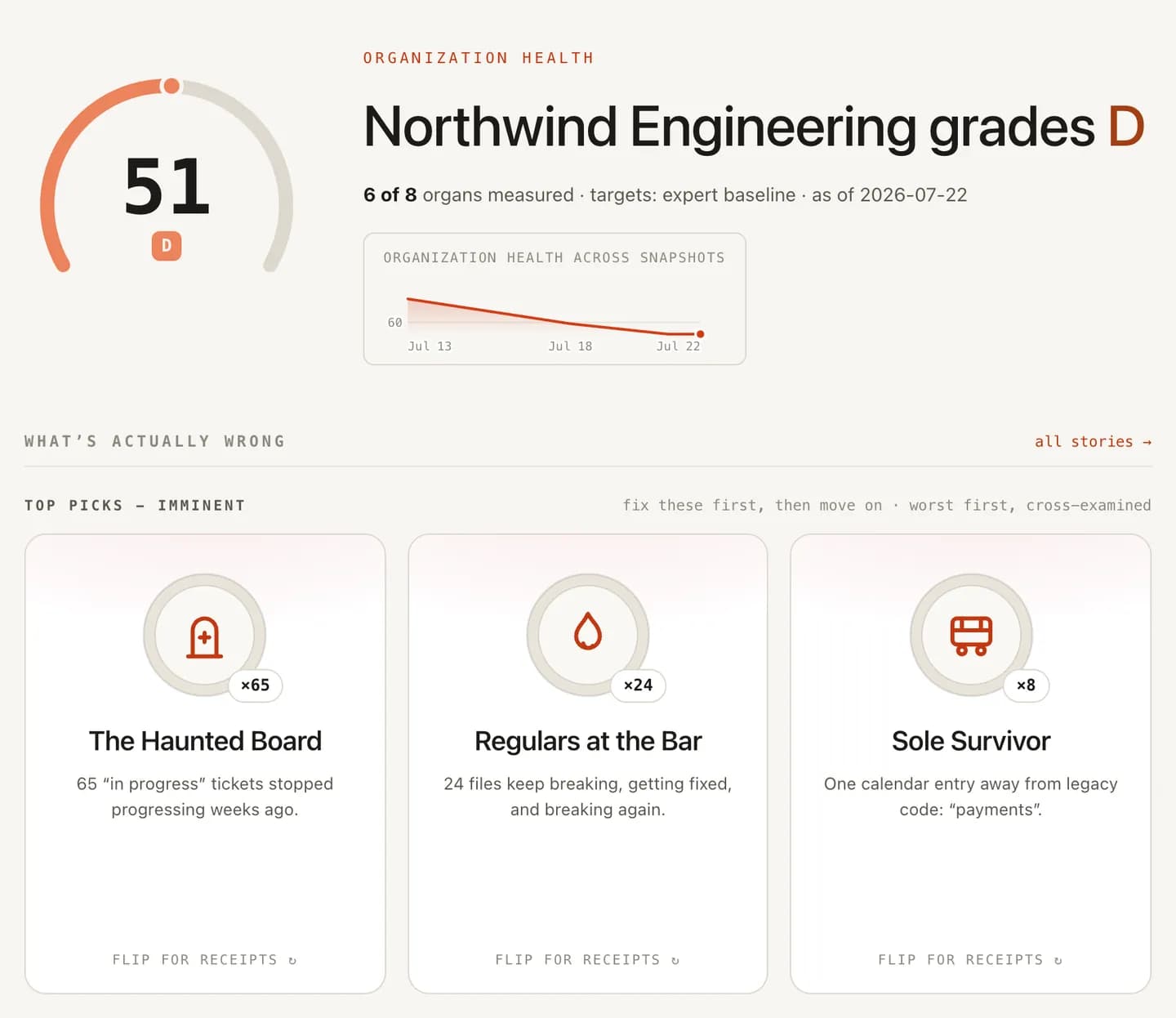
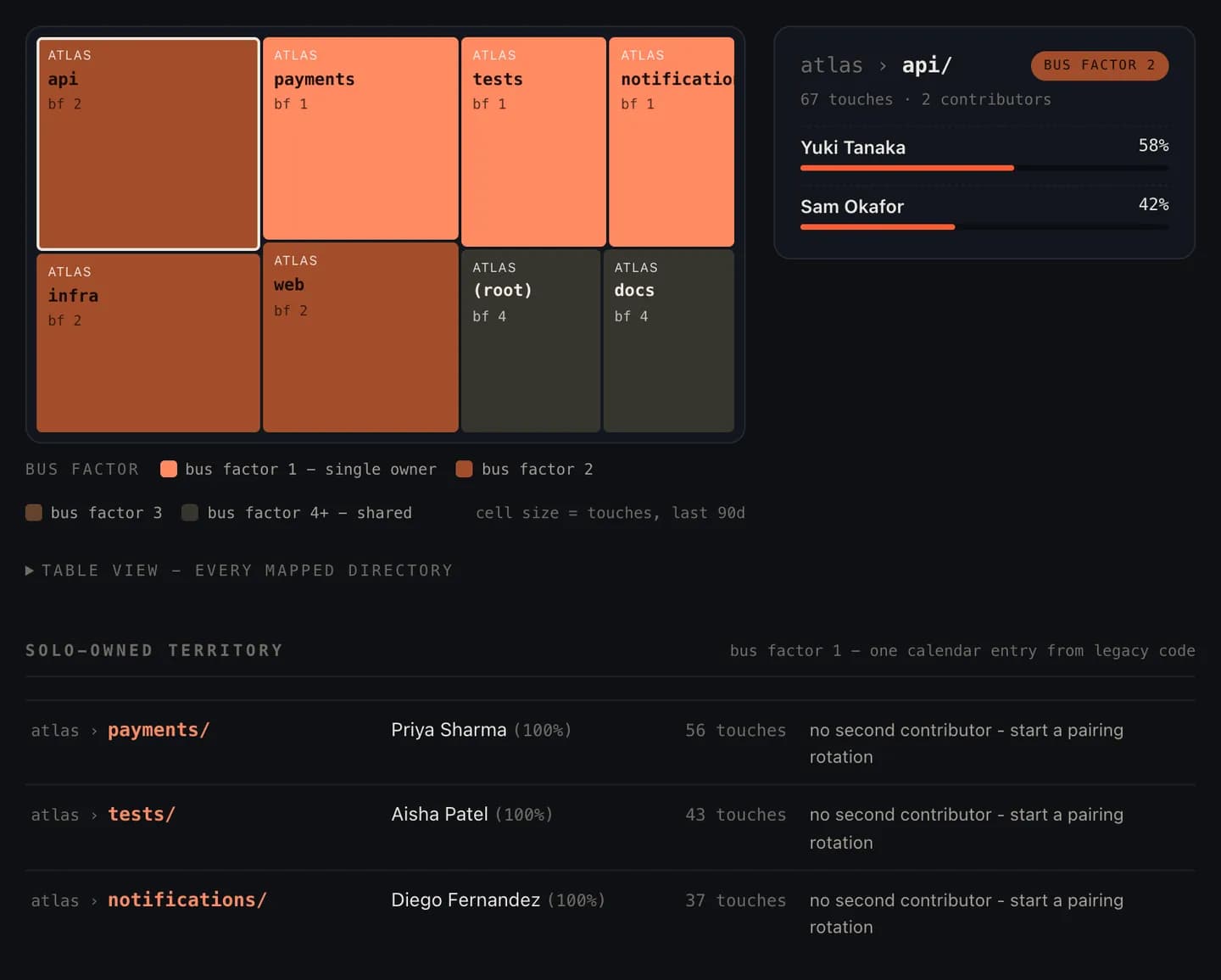
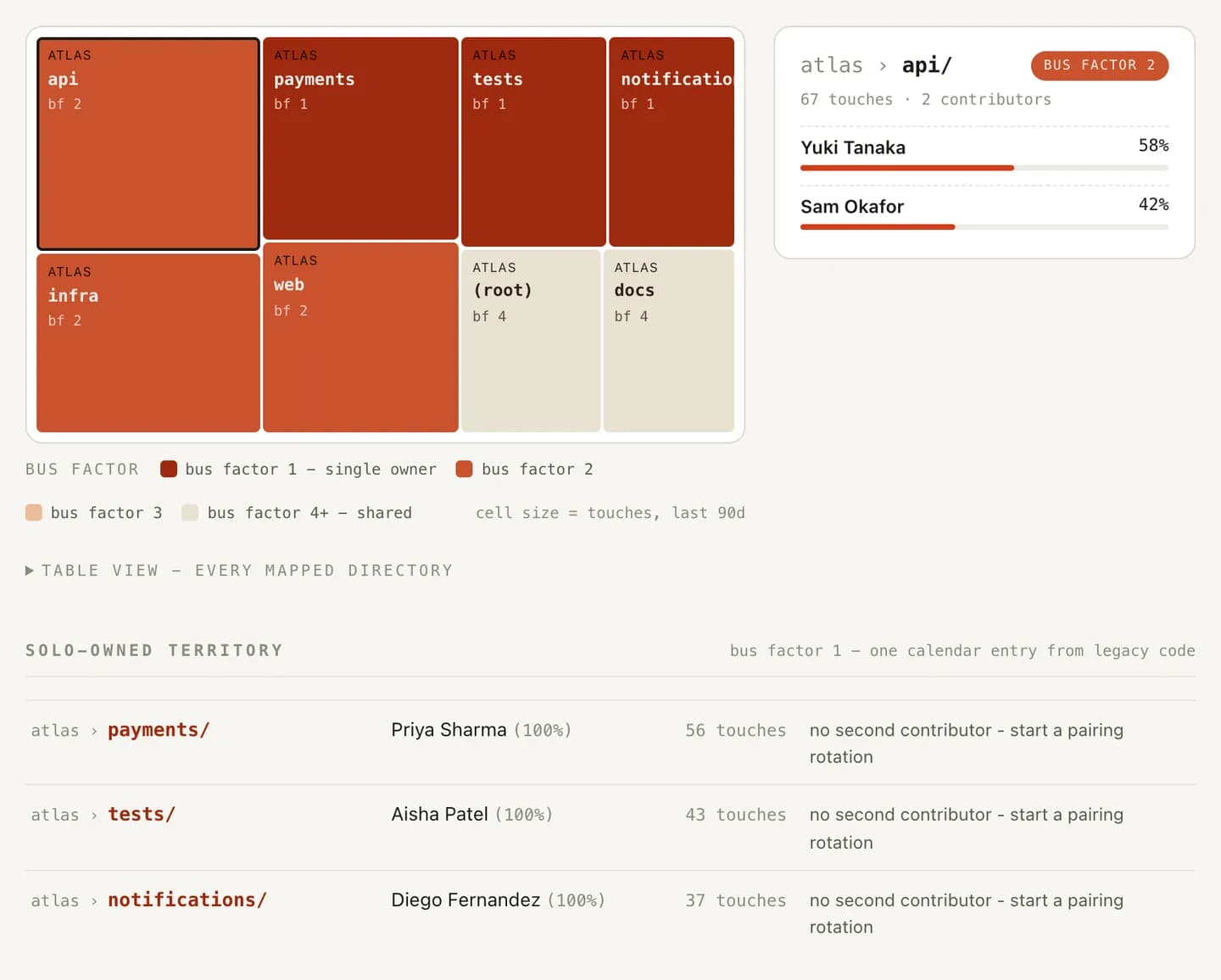
That's the seat Busfactor builds for. Allocation and CapEx artifacts whose every figure traces to actual rows under a printed ruleset version, so an auditor can re-run the export and get byte-identical output, which is a different kind of claim than "patented" or "audit-ready." AI attribution from deterministic evidence only, with blind spots disclosed instead of classified over. And the layer neither vendor ships: a graded verdict on the org with receipts and priced consequences, not dashboards or FTE splits to interpret. Per-developer pricing with no seat minimum, under both LinearB's Enterprise floor and Jellyfish's estimated minimums.
We've run this same fair-comparison format head-to-head against each: Busfactor vs LinearB and Busfactor vs Jellyfish, concessions included. Bring the same skepticism there.
Frequently asked
What does Jellyfish cost compared to LinearB?
LinearB publishes its prices: Essentials at $29/contributor/month (billed annually, 30-seat minimum) and Enterprise at $59/contributor/month (50-seat minimum), as of July 2026. Jellyfish publishes no prices at all - it's quote-only with annual contracts. Third-party sources estimate $20-40/developer/month with annual minimums around $30K or more; treat those as estimates, not quotes. Community reports describe Jellyfish as impractical for teams under roughly 30-50 engineers, which matches its sales-led enterprise motion.
Is Jellyfish's effort-allocation model accurate?
It's genuinely robust on messy data - the patented Work Model infers each engineer's effort split in FTEs from Jira and Git activity with no timesheets, which is exactly why finance teams buy it. But the scoring function is not disclosed (it's the patent), the current product adds AI-powered categorization on top, and no published material claims a customer or auditor can recompute their own allocation. Accuracy is asserted by authority - patented, audit-ready - rather than demonstrated by reproducibility. Whether that's acceptable depends on who has to sign off on the numbers.
Should I pick LinearB or Jellyfish?
They're often not competing for the same buyer. Pick LinearB if you want a self-serve engineering-metrics platform with published pricing, live benchmarks, and PR automation - it's buyable by an engineering leader without a procurement cycle. Pick Jellyfish if the driving requirement is finance alignment: cost capitalization, R&D tax credits, board-grade allocation reporting, and you're large enough for a sales-led annual contract. If both fit, the tiebreaker question is who needs to verify the numbers, and whether they can.
Receipts
- LinearB - Pricing page (as of July 2026)
- LinearB - Engineering Benchmarks report (8.1M+ PRs, 4,800 teams)
- LinearB - 2026 release notes (AI Analytics, MCP)
- Jellyfish - the Work Allocations model (how effort is calculated)
- Jellyfish - DevFinOps (capitalization + R&D tax credits)
- Jellyfish - AI Impact platform page
- Jellyfish - Life Cycle Explorer launch announcement
- Jellyfish - Series C announcement ($71M, Feb 2022)
- CodePulse - Jellyfish pricing review (third-party estimate)