Jellyfish Alternatives (2026): A Fair Field Guide
A FAIR FIELD GUIDE
Jellyfish is quote-only and enterprise-first. Five alternatives for mid-2026 - LinearB, Swarmia, DX, Faros AI, Busfactor - judged fairly, receipts included.
The band we grade against.
Illustrative example
TL;DR: Jellyfish is a serious product with a specific shape: enterprise FP&A for engineering (patented zero-timesheet allocation, R&D tax-credit support, board rollups), sold quote-only on annual contracts. People hunt for alternatives when that shape doesn't fit. They're under the practical deal floor, they need numbers an auditor can recompute rather than trust, or they wanted a diagnosis and got rollups. Here are the five real options as of mid-2026, what each genuinely leads at, and who should pick which, with the concessions Jellyfish has honestly earned left standing.
Method note, because this page is written by a vendor on it: every claim is cited to primary sources, estimates are flagged as estimates, and each entry concedes before it criticizes. The vendor-neutral frame lives in the buyer's guide and the evaluation questions; the recomputability axis this page leans on is documented across the whole field in the determinism audit.
What you're replacing (and what's hard to replace)
Jellyfish's core artifact is the Work Model: it reads Jira and Git exhaust and splits each engineer's week into FTE fractions across projects - no timesheets, famously tolerant of messy trackers - which DevFinOps then turns into "audit-ready" capitalization reports and R&D tax-credit support. Two things are true at once. That motion can look self-funding to a CFO, and no alternative below replicates the tax-credit bundle. And: the scoring function is patented and undisclosed, so the allocation your finance team signs is a number nobody outside the vendor can recompute. Trust, not verification. Pricing is quote-only; third-party estimates (CodePulse, Vendr, estimates rather than vendor figures) put it around $20-40 per developer per month with annual minimums reported near $30K+. The full head-to-head is Busfactor vs Jellyfish; what follows is the wider field.
Jellyfish alternatives in 2026, tool by tool
1. LinearB: the biggest name adjacent
The category's most-benchmarked platform (a 2026 Gartner MQ Leader with an 8.1M-PR benchmark cohort) plus real PR automation via gitStream. The catch for a Jellyfish-shaped buyer: the allocation-and-capitalization features (resource allocation, cost capitalization, Jira data, Slack delivery) live in the Enterprise tier, which as of July 2026 runs $59/contributor/month with a 50-user minimum. You'd be swapping a quote-only contract for a per-seat one, not escaping the enterprise motion. Fair fight write-ups: LinearB vs Jellyfish and Busfactor vs LinearB.
2. Swarmia: the transparent capitalization play
The strongest like-for-like on the finance use case with disclosed mechanics: software capitalization built on rule-based work filtering, developer FTEs inferred from commit and issue activity and refined by an HR-system integration (vacations subtracted), with SOC 1 and SOC 2 Type 2 behind it, plus self-serve pricing that starts free for up to 9 developers. Eyes-open notes: the Investment Balance pitch includes an AI auto-categorizer that can silently move money between buckets, the capitalization page names no accounting standard, and no reproducibility claim is made. Deep dives: Swarmia vs Jellyfish and Busfactor vs Swarmia.
3. DX: when the real question was measurement all along
Some Jellyfish evaluations are actually "leadership wants credible engineering numbers," not "finance needs allocation." If that's you, DX is the survey-science standard: the DXI benchmarked across 800+ organizations, the DX Core 4 framework procurement already speaks, and Atlassian-scale distribution since the acquisition. It's quote-only with one-year contracts, and its flagship numbers are Likert composites: perceptions, honestly collected, structurally not recomputable from system data. The frameworks themselves are compared in DORA vs SPACE vs DX Core 4; the head-to-heads are Jellyfish vs DX and Busfactor vs DX.
4. Faros AI: the same weight class, different problem
If you're genuinely enterprise-sized and the pain is fragmentation rather than FP&A, Faros unifies 100+ tools into a canonical schema with SaaS/hybrid/on-prem deployment and real cohort methodology on AI impact. It shares Jellyfish's deal shape - quote-only, three tiers, sales-led - so it solves the fragmentation problem while leaving the pricing objection intact. Its insight layer explicitly runs ML and GenAI, so ask the reproducibility question early. Details: Busfactor vs Faros AI.
5. Busfactor: the recomputable-numbers option
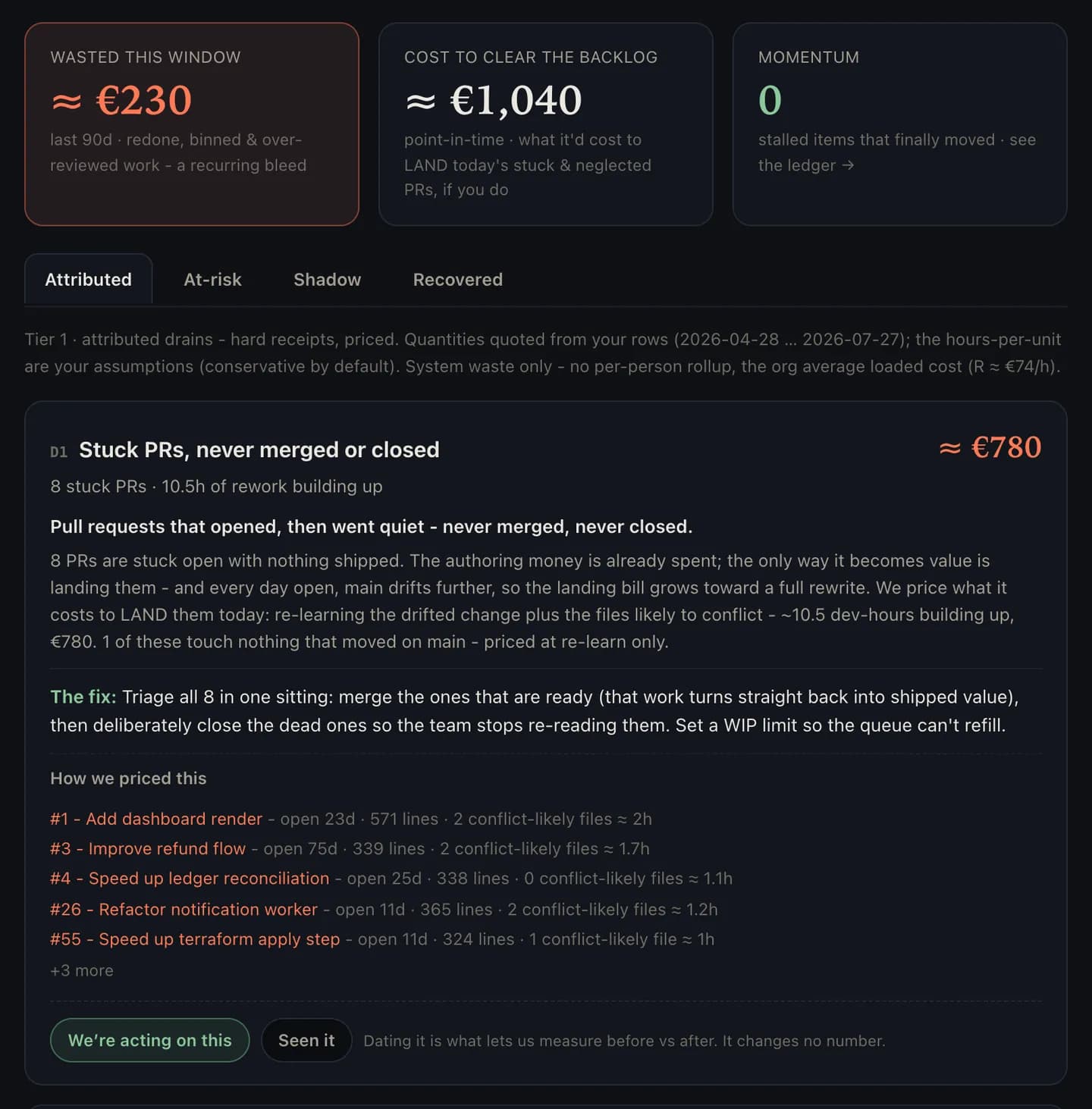
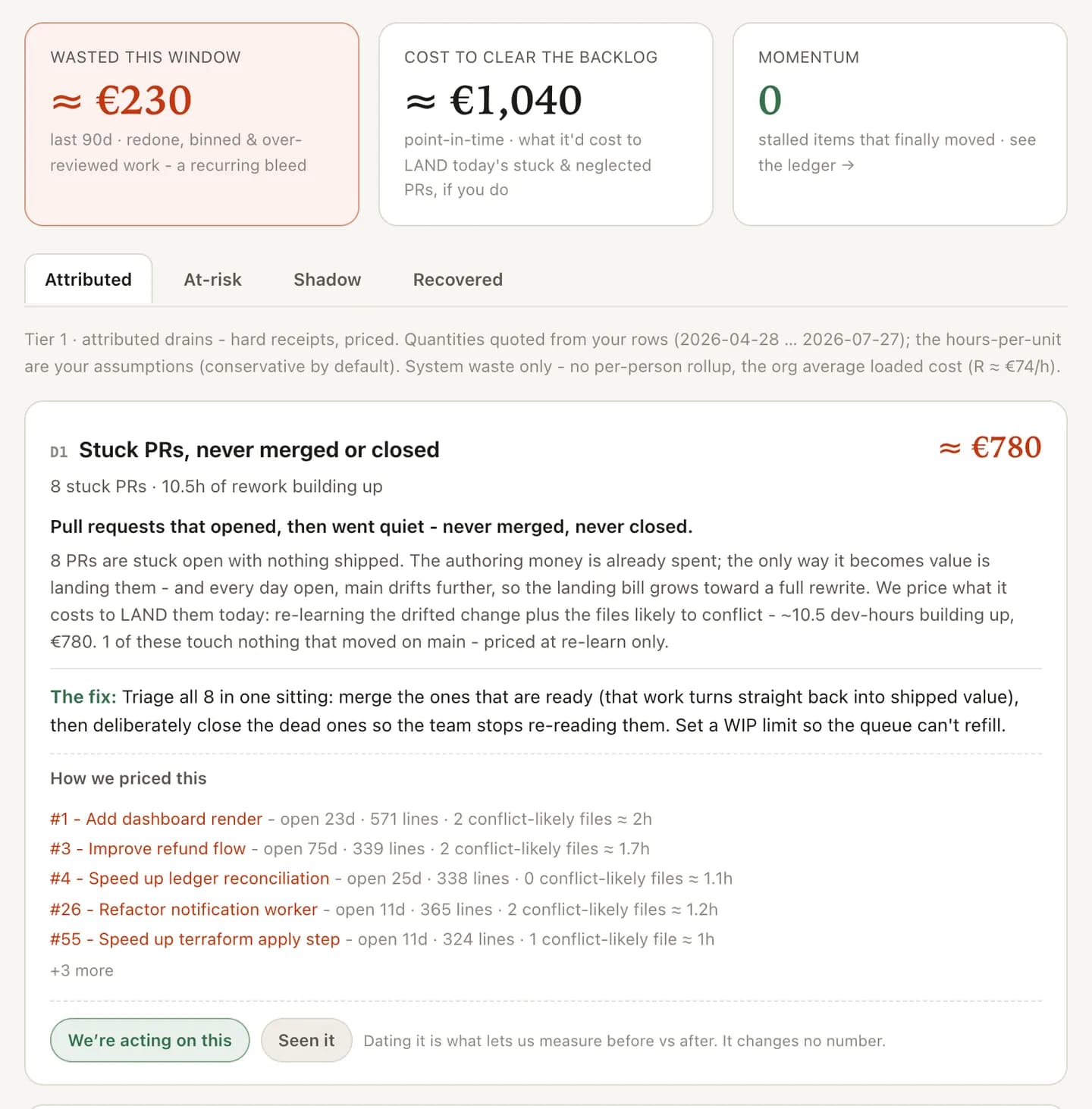
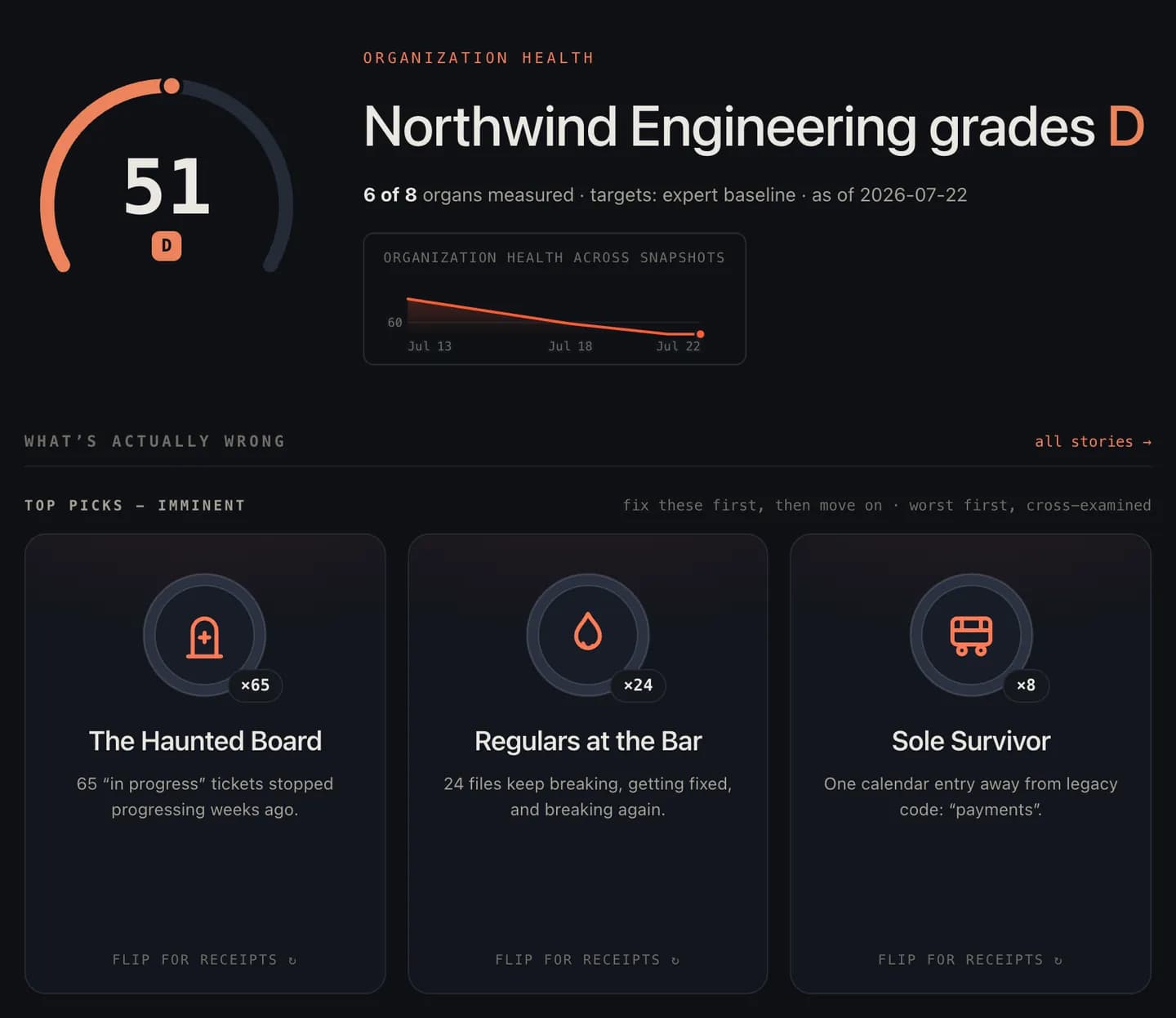
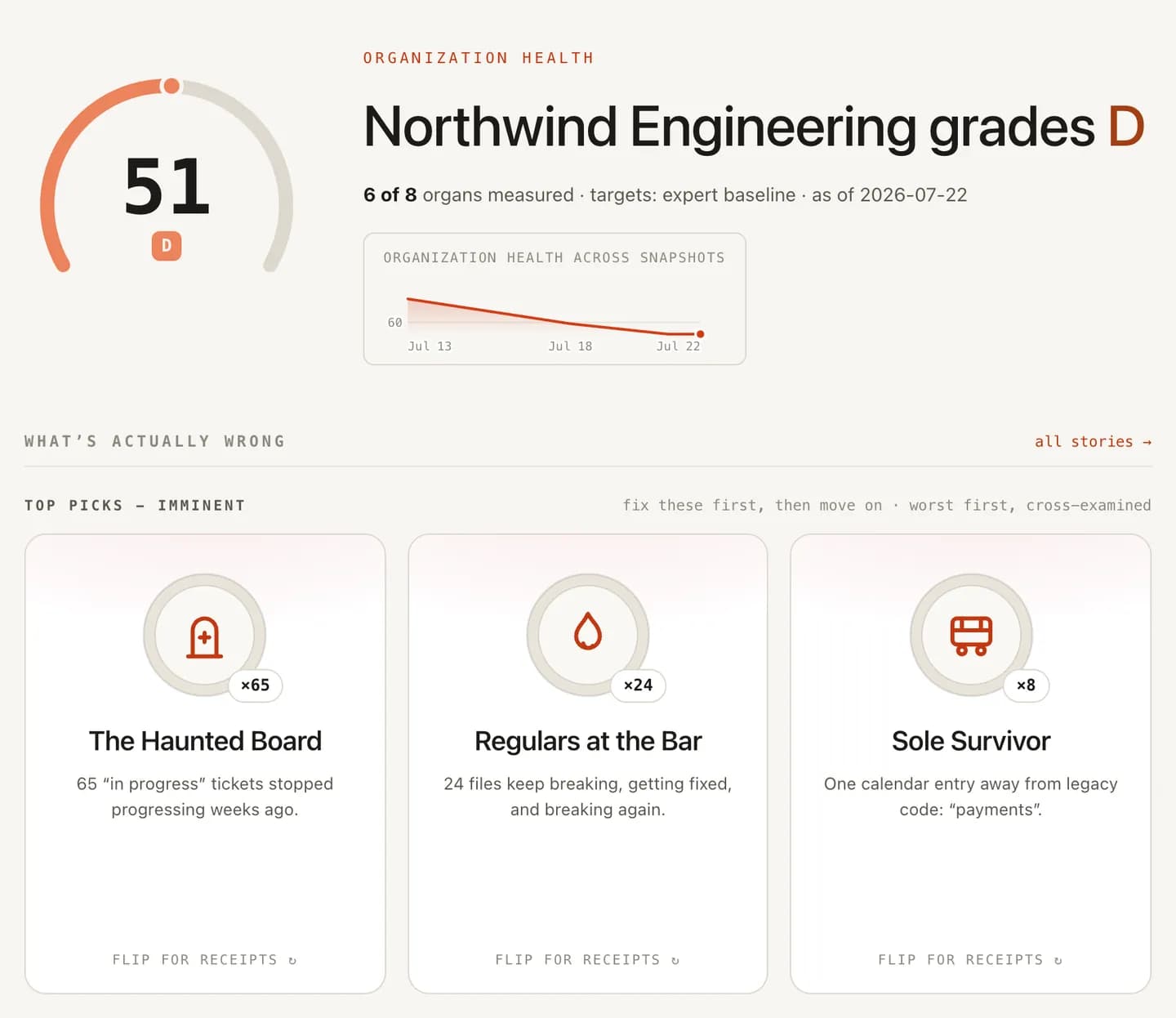
Our entry, held to the same standard as the rest. Where we lead against Jellyfish specifically: allocation that is rule-based against an org-configured map, so every unit of money traces to actual rows, with a CapEx export that prints its provenance (run id, engine version, ruleset version, content hash) so your auditor re-derives the number instead of trusting a patent. A graded verdict with receipts and priced drains rather than rollups. Published per-developer tiers on the pricing page, self-serve, no sales call, live below the enterprise deal floor. Where we concede: no R&D tax-credit studies, no zero-config allocation for genuinely chaotic Jira (ours needs an org-configured map), GitHub-first today, and no SOC certifications yet. If those are decisive, buy accordingly; the full comparison doesn't hide them.
The one-table version
| You are… | Pick |
|---|---|
| Enterprise FP&A + tax credits, comfortable with quote-only | Stay with Jellyfish |
| Want the big-name platform and can fund per-seat Enterprise | LinearB |
| Want disclosed capitalization mechanics, self-serve entry | Swarmia |
| Actually shopping for a measurement standard, not allocation | DX |
| Enterprise-scale tool sprawl, need on-prem | Faros AI |
| Need finance numbers an auditor can re-derive, published pricing | Busfactor |
How to actually decide
Run your shortlist against the same quarter of your own history and ask every vendor the evaluation questions, with the audit one first: when my finance team signs this number, who can recompute it? If the search that brought you here started from LinearB instead, the companion page is the LinearB alternatives shortlist. Whatever you buy, buy numbers you can check. It's your name on the memo, not the vendor's.
Frequently asked
Why do teams look for a Jellyfish alternative?
Usually one of three walls. The deal wall: Jellyfish publishes no prices, sells annual contracts through a sales motion, and third-party estimates put annual minimums around $30K+ - community write-ups describe it as impractical below roughly 30-50 engineers, so smaller orgs are outside the door before the demo. The audit wall: its patented Work Model splits each engineer's week across projects with an undisclosed scoring function, so neither you nor your auditor can recompute the allocation your finance team signs. And the product wall: it's rollups for leadership, not a diagnosis of where delivery actually hurts.
Is there a self-serve alternative to Jellyfish?
Yes. Swarmia (free up to 9 developers, then per-seat, with rule-based capitalization behind SOC 1/SOC 2 Type 2), GitClear (free Starter tier, per-seat forensics), and Busfactor (published per-developer tiers, connect read-only, findings the same day) are all self-serve. LinearB offers a 45-day trial but its allocation and capitalization features sit in the sales-led Enterprise tier; DX and Faros AI are quote-only enterprise motions like Jellyfish itself.
What is the best Jellyfish alternative for cost capitalization?
The two candidates that do capitalization with disclosed mechanics are Swarmia - rule-based work filtering, FTE inference refined by an HR integration, SOC 1 and SOC 2 Type 2, though its pitch includes an AI auto-categorizer and its page names no accounting standard - and Busfactor, whose allocation is rule-based against an org-configured map with provenance printed on the CapEx export so an auditor can re-derive it. Jellyfish still leads if you specifically want R&D tax-credit support bundled in; neither of those two does tax-credit studies.
Receipts
- Jellyfish - the work allocations model (vendor blog)
- Jellyfish - DevFinOps product page
- CodePulse - Jellyfish pricing review (third-party estimate)
- Vendr - Jellyfish marketplace listing (third-party estimate)
- LinearB - Pricing page (as of July 2026)
- Swarmia - Software capitalization product page
- Faros AI - Pricing page (tier structure, as of July 2026)